A perfect 100/100/100/100 — without touching the design
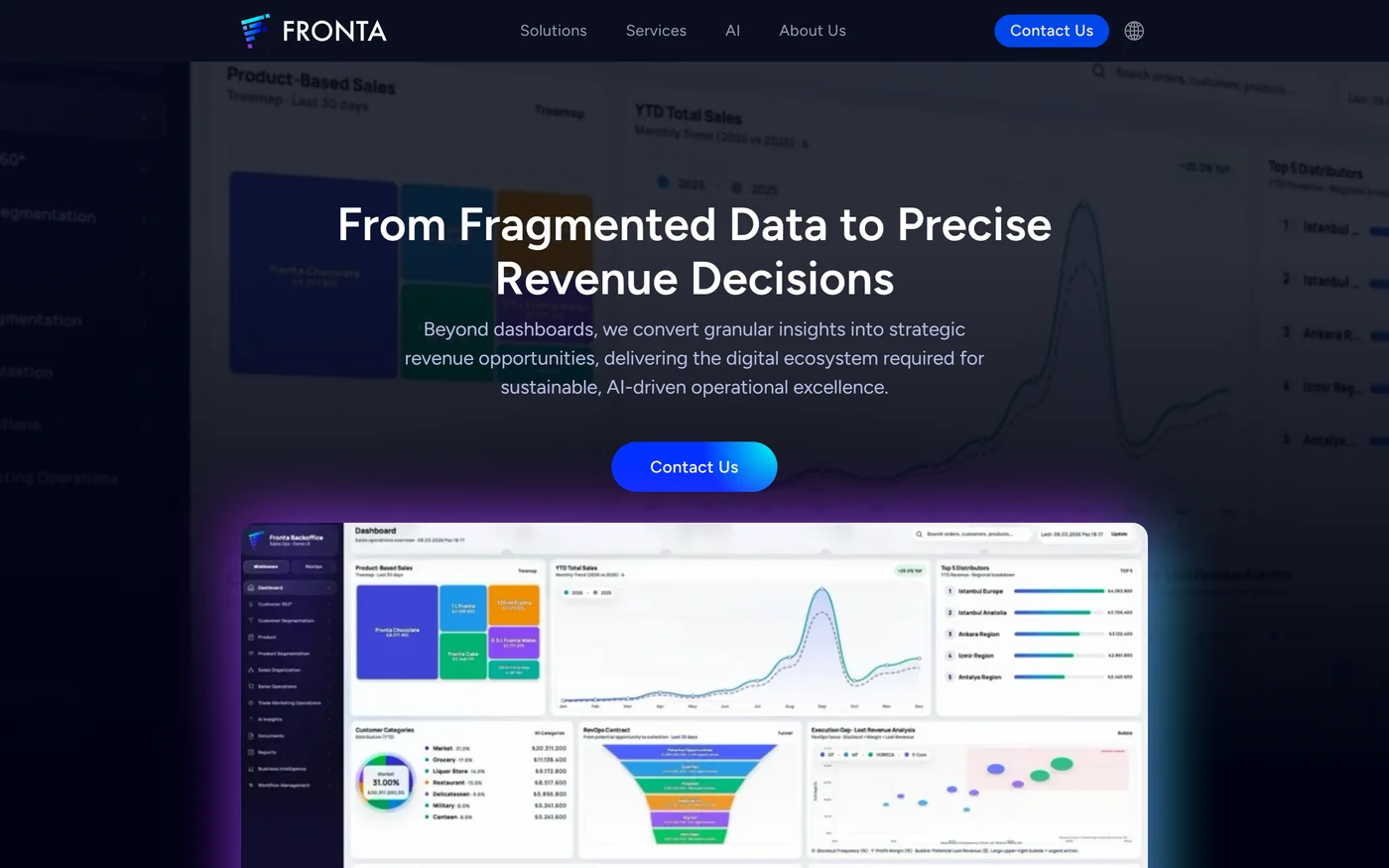
Fronta runs an enterprise RevOps and AI field-intelligence platform on a dark, finished, content-heavy Next.js site shipping in English and Turkish. Logic Grid Studio left the design exactly as it was and rebuilt the foundations beneath it: a perfect 100/100/100/100 Lighthouse audit — Performance, Accessibility, Best Practices and SEO — every library and framework version brought current, and technical SEO hardened across the site. Speed, currency and discoverability, with zero redesign.
The situation
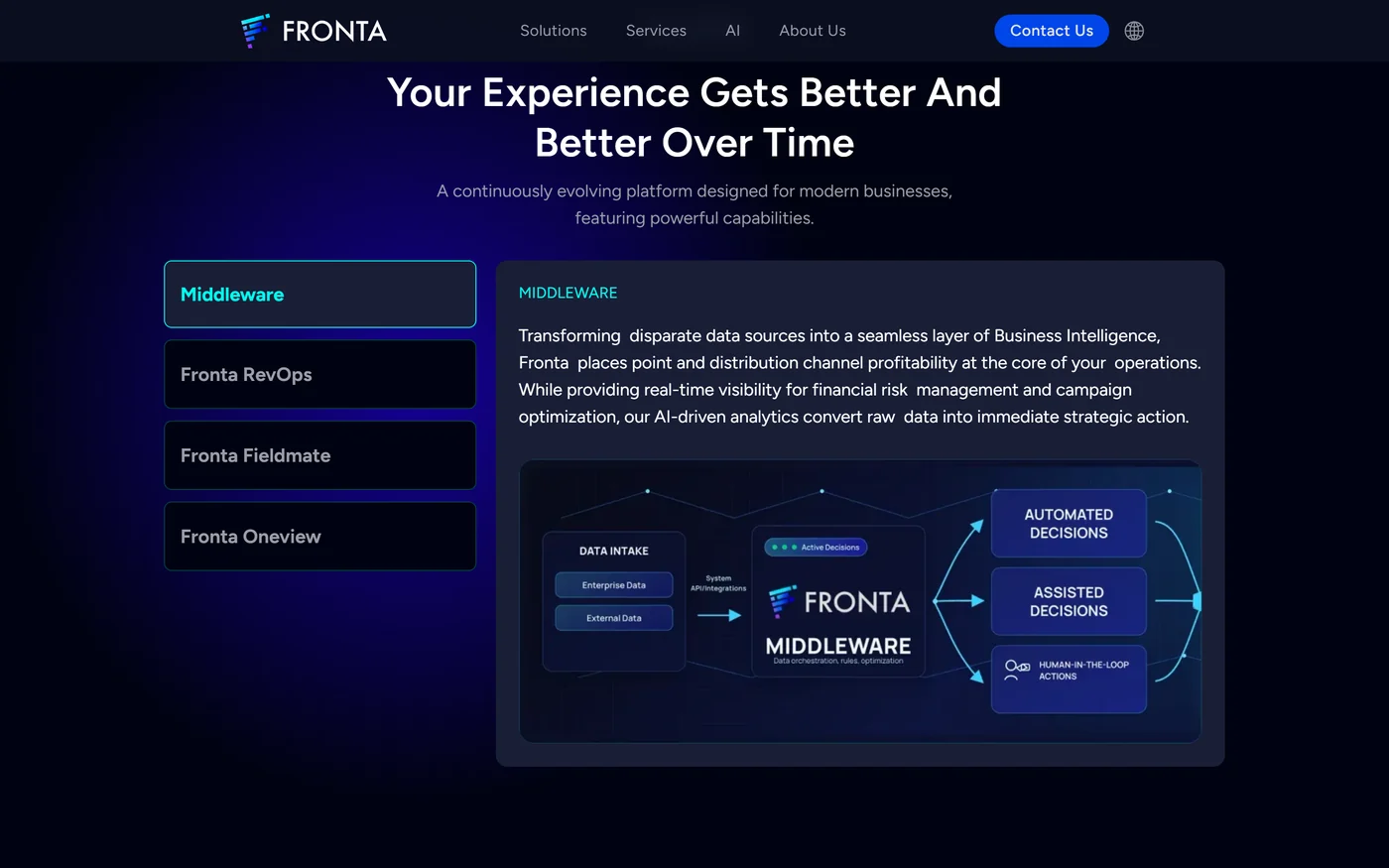
Fronta is an established enterprise company running a Revenue Operations and AI-driven field-intelligence platform for supply chains, distribution networks and field operations — products spanning Middleware, RevOps, Fieldmate, Oneview and Insight, presented on a dark, content-heavy Next.js site shipping in English and Turkish. The design was finished and the brand was settled; nothing about how the site looked or worked for a visitor was in question. The problem sat entirely under the surface. A real, dense enterprise platform site like this accumulates the things that quietly hold a foundation back: dependency and framework versions drifting behind current, Core Web Vitals leaving performance on the table, accessibility and best-practices gaps, and technical-SEO details that keep a credible site from being as discoverable as it deserves. The mandate was unusually precise — make the existing site genuinely fast, fully current and properly discoverable, and do it without changing a single pixel of the design.
Why they came to us
Fronta came to Logic Grid Studio because the brief sat exactly where most vendors force a false choice: nearly every offer to make a site faster, more modern and more discoverable arrives bundled with a redesign. Fronta did not want one. The design was done; what it needed was a partner who could treat performance, dependency currency and technical SEO as one engineering problem on top of an existing codebase — not a reason to start over — and hold the original design perfectly intact while rebuilding everything underneath it. That is the integrated engineering-and-growth system LGS runs, applied here not to a new build but to the disciplined modernization of a site that was already good and simply needed to be made genuinely fast, current and discoverable.
Constraints
One constraint governed every decision and was the entire point of the engagement: no design or UX changes. The existing design had to be preserved exactly — same layout, same dark enterprise look, same components, same pixels, same behaviour for the visitor — while the foundations underneath were rebuilt. Within that hard rule the targets were absolute rather than incremental, on a real enterprise platform site rather than a thin marketing page: a perfect Lighthouse audit on all four pillars at once — Performance, Accessibility, Best Practices and SEO — every library and framework version upgraded to current with the accompanying technical debt cleared, and technical SEO hardened across the Next.js site, all with the design treated as immovable.
What we owned
Logic Grid Studio owned the foundations end to end, under a strict no-redesign rule. On performance, we took Fronta's Core Web Vitals and the full Lighthouse profile to a perfect 100 across all four categories — 100 Performance, 100 Accessibility, 100 Best Practices and 100 SEO — on the existing, content-heavy site. On modernization, we upgraded every library and code/framework version to current, bringing the whole Next.js stack fully up to date and clearing the accumulated technical debt that comes with versions left to drift, with no regressions to the existing look or behaviour. On discoverability, we hardened technical SEO across the site. Throughout, we owned the constraint as much as the work: the design and UX were preserved exactly as Fronta had them — we changed what was under the hood, never what was on the screen.
Our approach
We started from the constraint, not the scorecard: the design was not ours to touch, so every gain had to come from the engineering beneath it. We treated the four Lighthouse pillars as one connected target rather than four separate chases — pushing Core Web Vitals and performance to a perfect 100 while bringing Accessibility, Best Practices and SEO to 100 alongside them, so no pillar was traded off against another and the design rendered pixel-identical at the end. Modernization ran in parallel and reinforced it: we brought every library and framework version up to current in a controlled way, clearing technical debt and removing a class of performance and best-practices drag that old dependencies carry, with each upgrade validated so the preserved design kept behaving exactly as before. Technical SEO was hardened across the site as part of the same foundation pass, so a credible enterprise platform became as discoverable as it already looked. The discipline of the whole engagement was restraint — reaching four perfect 100s on a real, content-heavy enterprise site is hard precisely because you cannot simplify the design to get there, and we did not.
The outcome
Fronta's site looks and behaves exactly as it did before — and now runs on foundations that are genuinely fast, fully current and properly discoverable. The proof is unambiguous: a perfect 100/100/100/100 Lighthouse audit — 100 Performance, 100 Accessibility, 100 Best Practices and 100 SEO — achieved on a real, content-heavy enterprise platform site with the design untouched. Underneath, every library and framework version has been brought current and the accompanying technical debt cleared, so the stack is modern rather than drifting, and technical SEO has been hardened across the site so a credible platform is now as discoverable as it presents. The whole engagement lands the point it was built to make: an existing, design-finished enterprise site can be made perfectly performant, fully modern and fully discoverable without a redesign — speed, currency and discoverability rebuilt under the hood, with zero design change.
Frequently asked questions
What did Logic Grid Studio do for Fronta?
Logic Grid Studio rebuilt the foundations beneath Fronta's existing enterprise RevOps and AI field-intelligence platform site without changing the design. They took the content-heavy Next.js site to a perfect 100/100/100/100 Lighthouse audit, brought every library and framework version current, and hardened technical SEO across the site. The entire engagement was delivered under a strict no-redesign rule, leaving the design and UX exactly as Fronta had them.
What did Logic Grid Studio deliver and own on the project?
LGS owned the foundations end to end: a perfect 100 across all four Lighthouse pillars — Performance, Accessibility, Best Practices and SEO — on the existing content-heavy site, a full Next.js stack upgrade with every library and framework version brought current and the accompanying technical debt cleared, and technical SEO hardened across the site. They also owned the constraint itself, preserving the same layout, dark enterprise look, components and pixel-level behaviour with no regressions. In short: they changed what was under the hood, never what was on the screen.
What technology and services were involved?
The work centred on Fronta's Next.js site, with a scope spanning SEO, Core Web Vitals and stack modernization across LGS's SEO/ASO/GEO and software-development service families. Core Web Vitals and the full Lighthouse profile were pushed to a perfect 100, the whole Next.js stack was upgraded to current versions, and technical SEO was hardened site-wide. The live site is at fronta.com.tr.
Why did Fronta work with Logic Grid Studio?
Fronta's design was finished and its brand settled, but nearly every vendor offer to make a site faster, more modern and more discoverable arrives bundled with a redesign — and Fronta did not want one. They needed a partner who could treat performance, dependency currency and technical SEO as one engineering problem on top of the existing codebase while holding the original design perfectly intact. That is the integrated engineering-and-growth system LGS runs, applied here to disciplined modernization rather than a new build.
Related services
Let's scope your next system together.